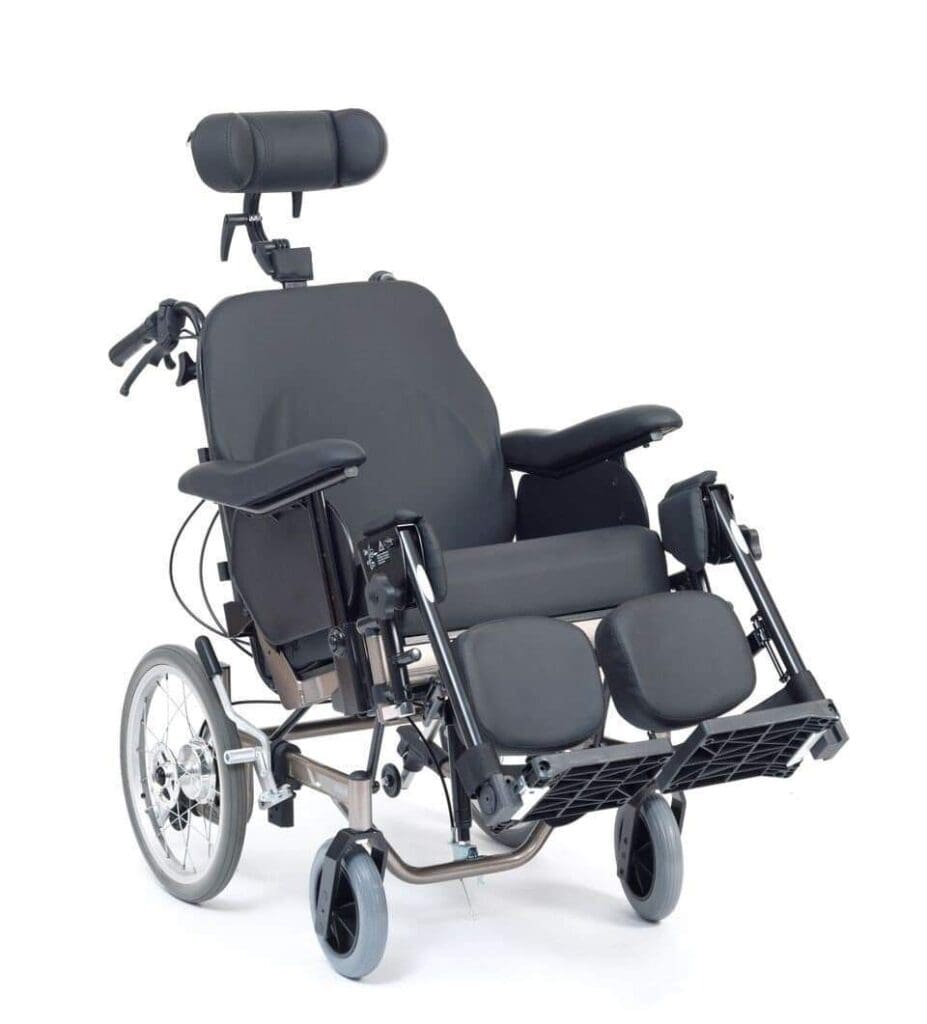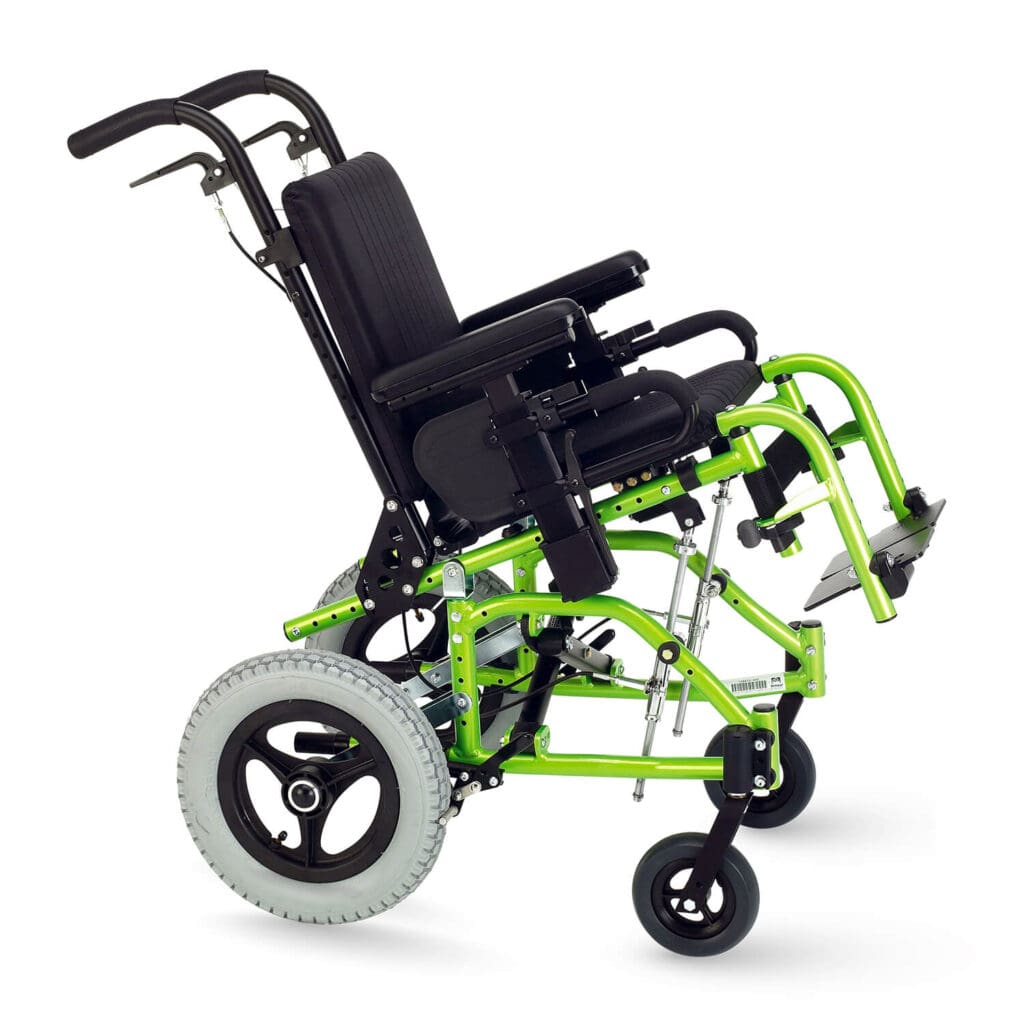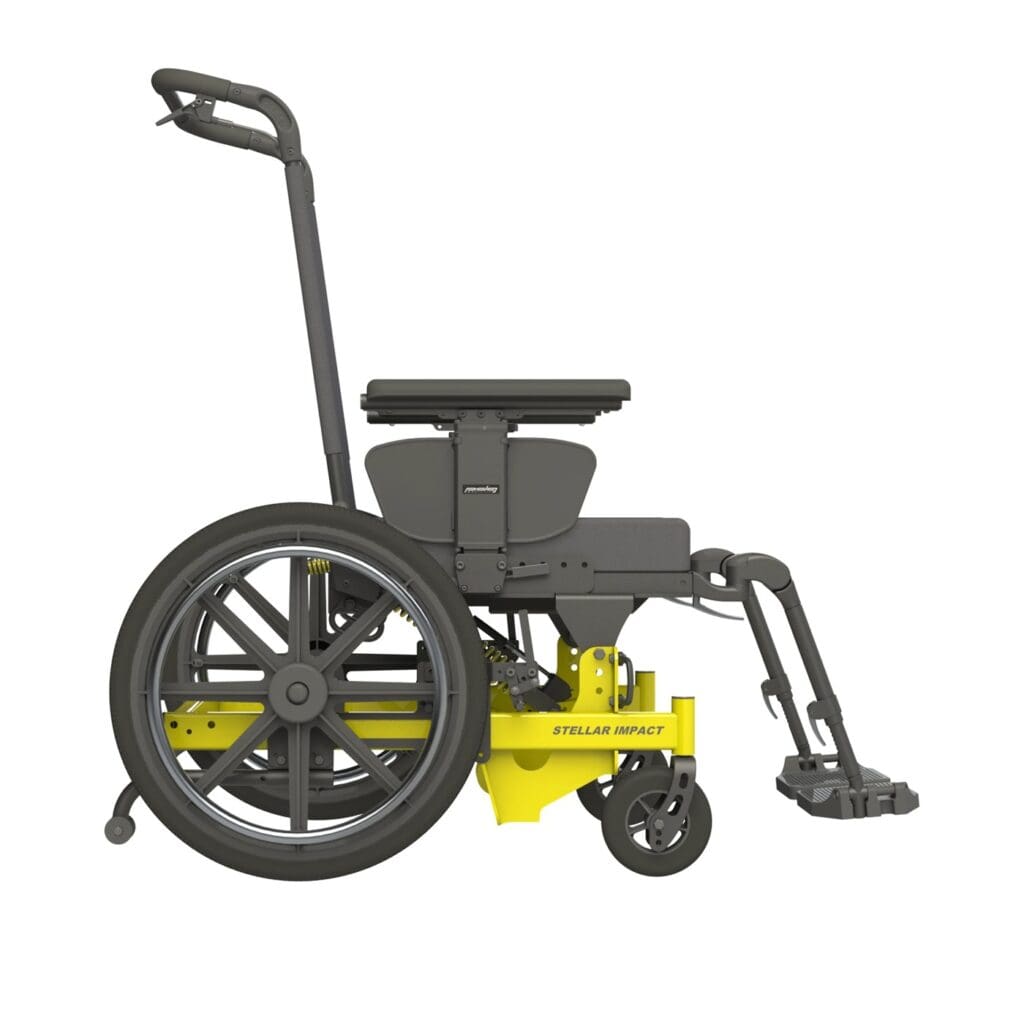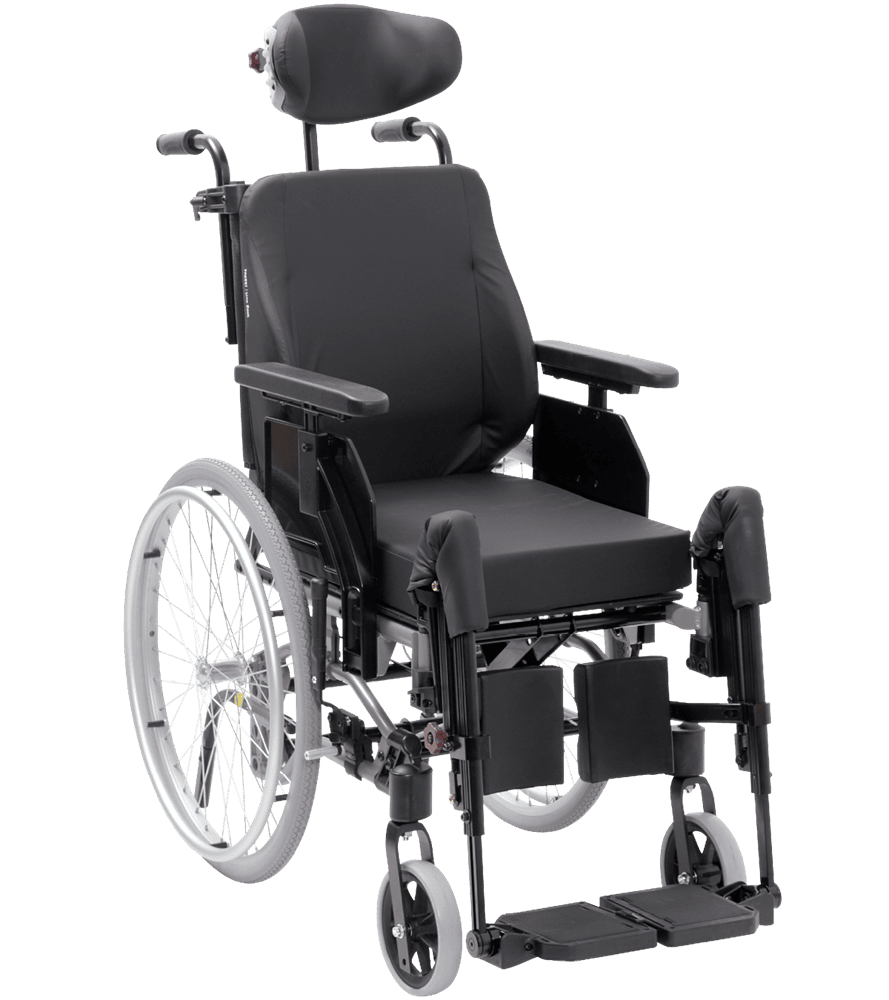
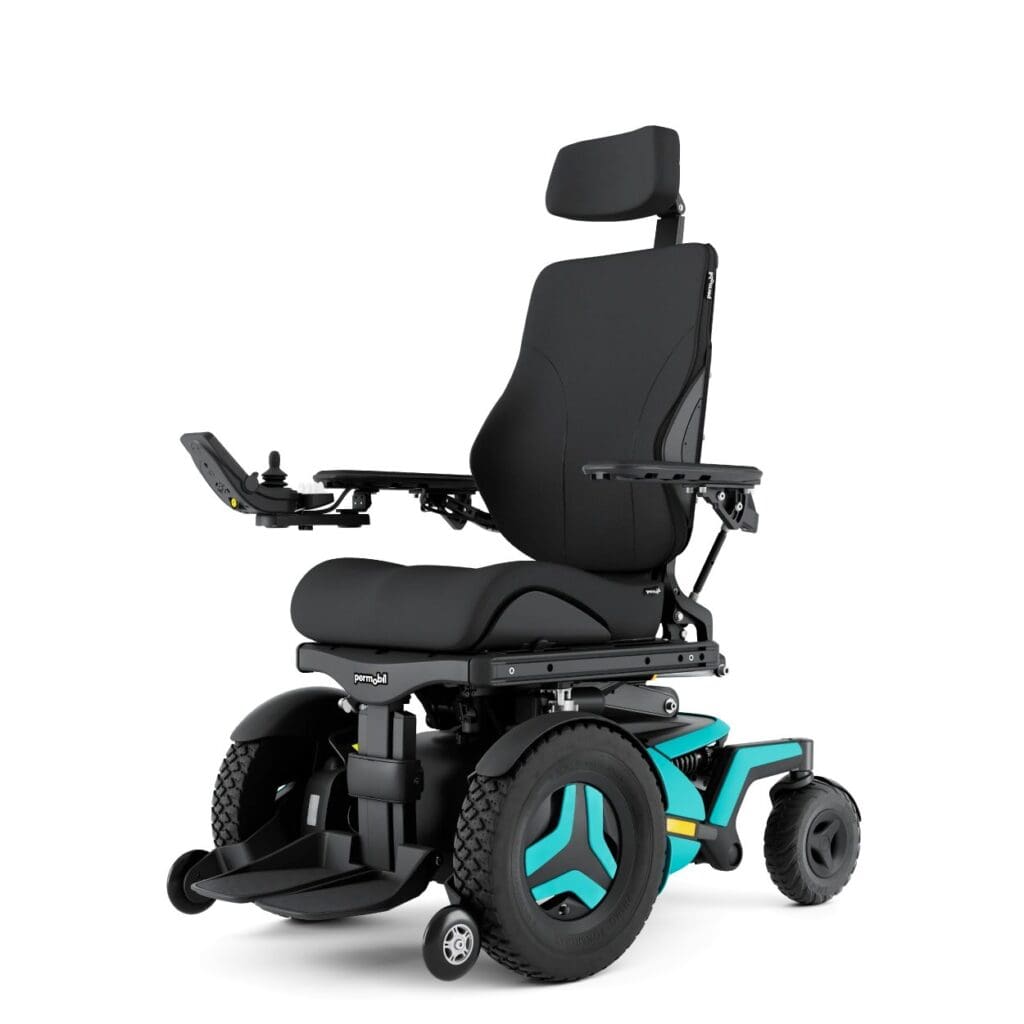
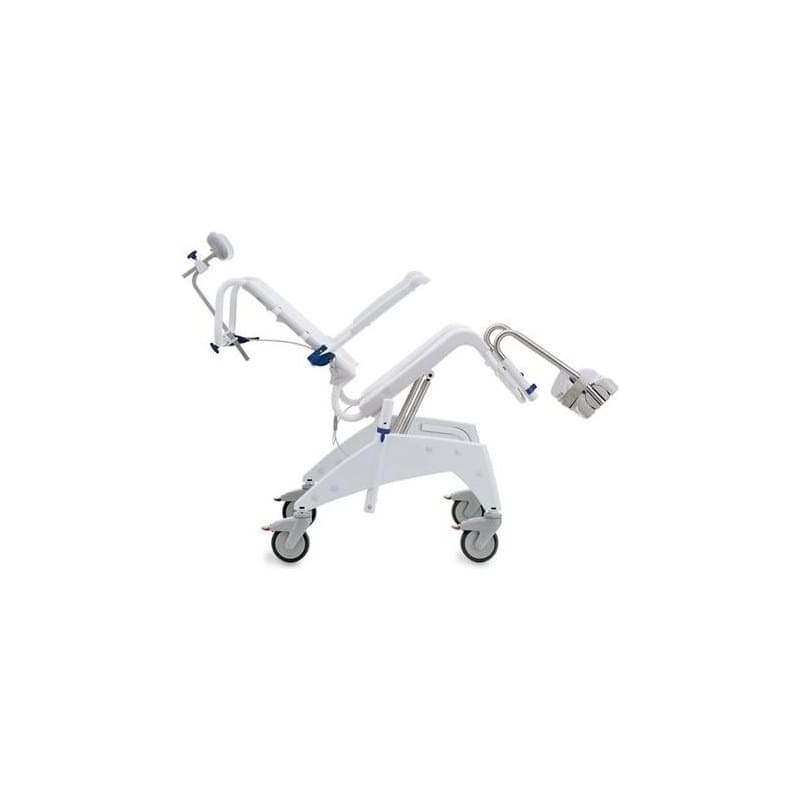
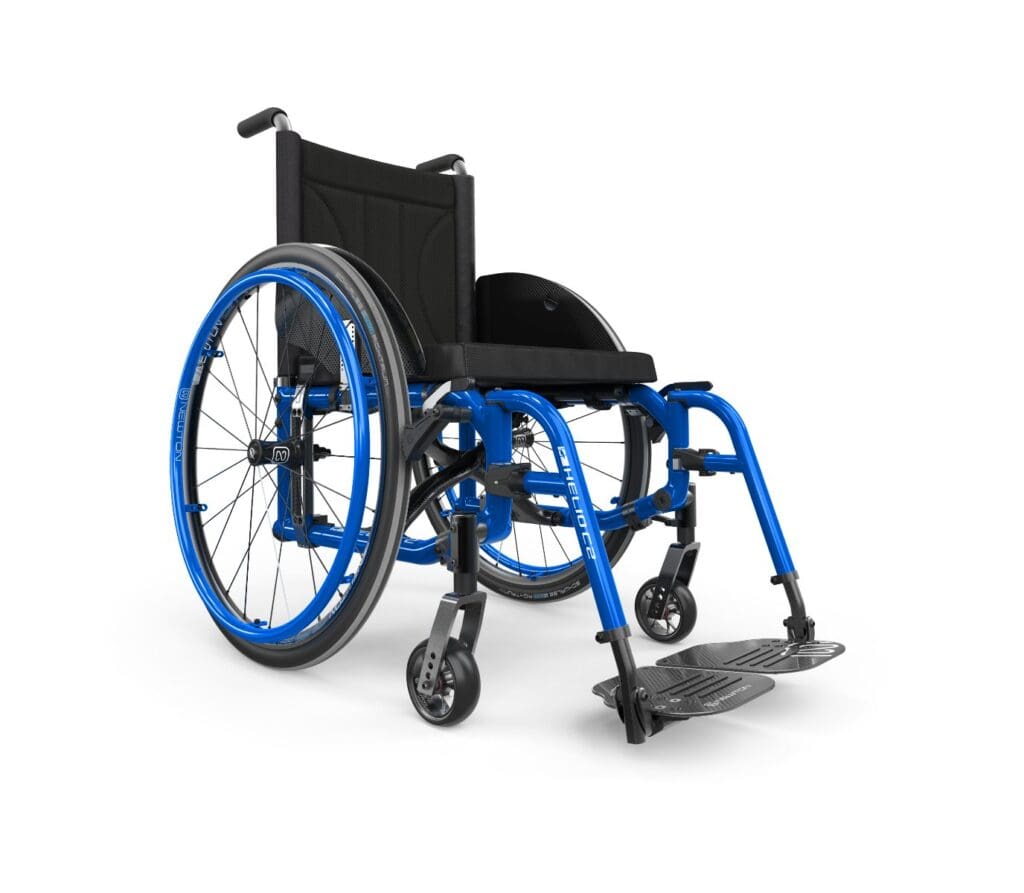
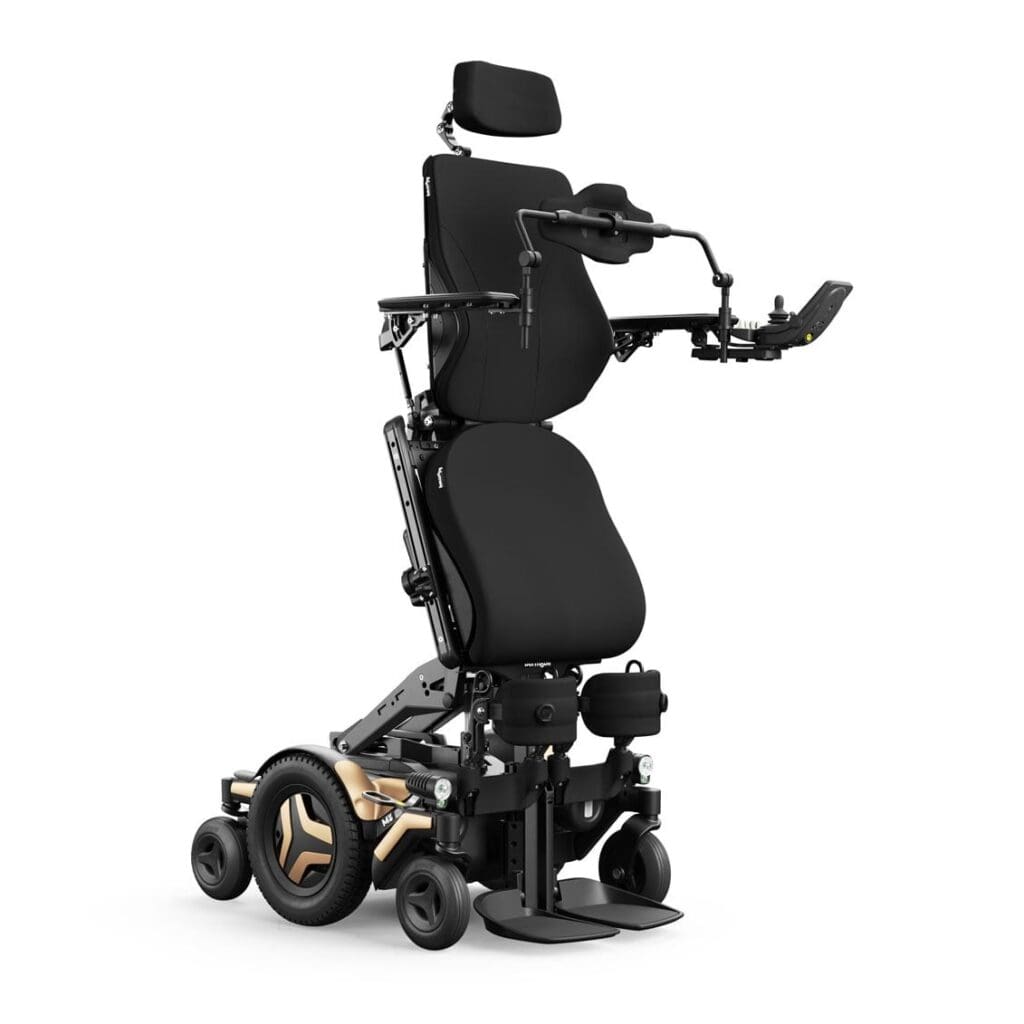
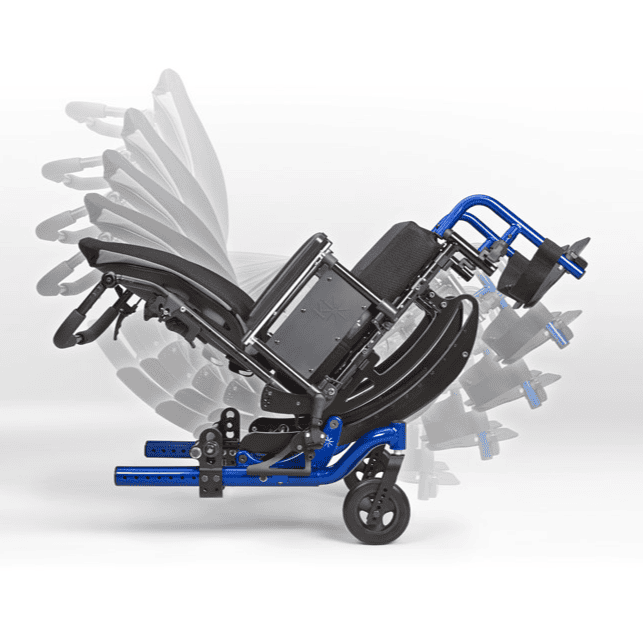
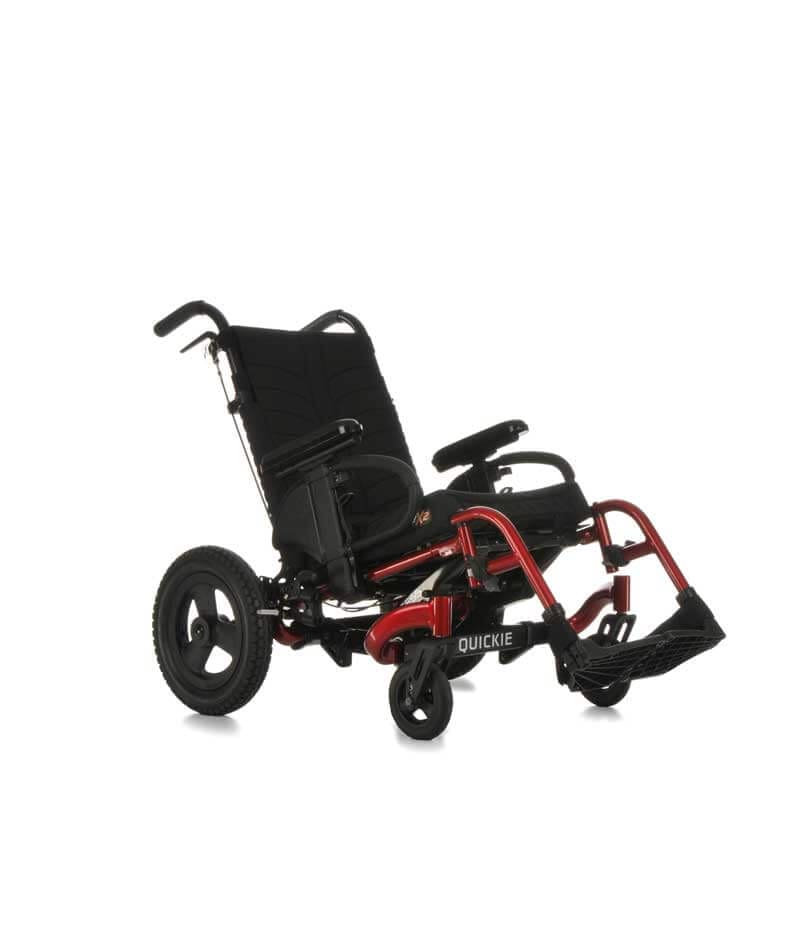
The Access answers a problem that comes up often in clinic: a client needs tilt and recline for pressure care, but tilting the chair usually takes away their ability to reach the wheels or the floor. The Access pivots at the knee, so knee rise stays low through the tilt and the client can keep foot propelling and stay under a table or a desk.
That pivot position also protects the low seat to floor height. Even with a thick pressure cushion or larger castors, the feet still reach the ground for stepping the chair along. If the client pushes with their hands instead, the tilt improves access to the wheels while holding a stable, functional posture.
Tilt and recline together meet the angles usually recommended for pressure management, and changing position through the day helps trunk posture, which in turn supports respiration, digestion and the function of other organs. For a client with kyphosis, setting the chair in a posterior angle brings the eyes back in line with the horizon and lets gravity help keep the head and trunk upright rather than sliding forward in the seat.