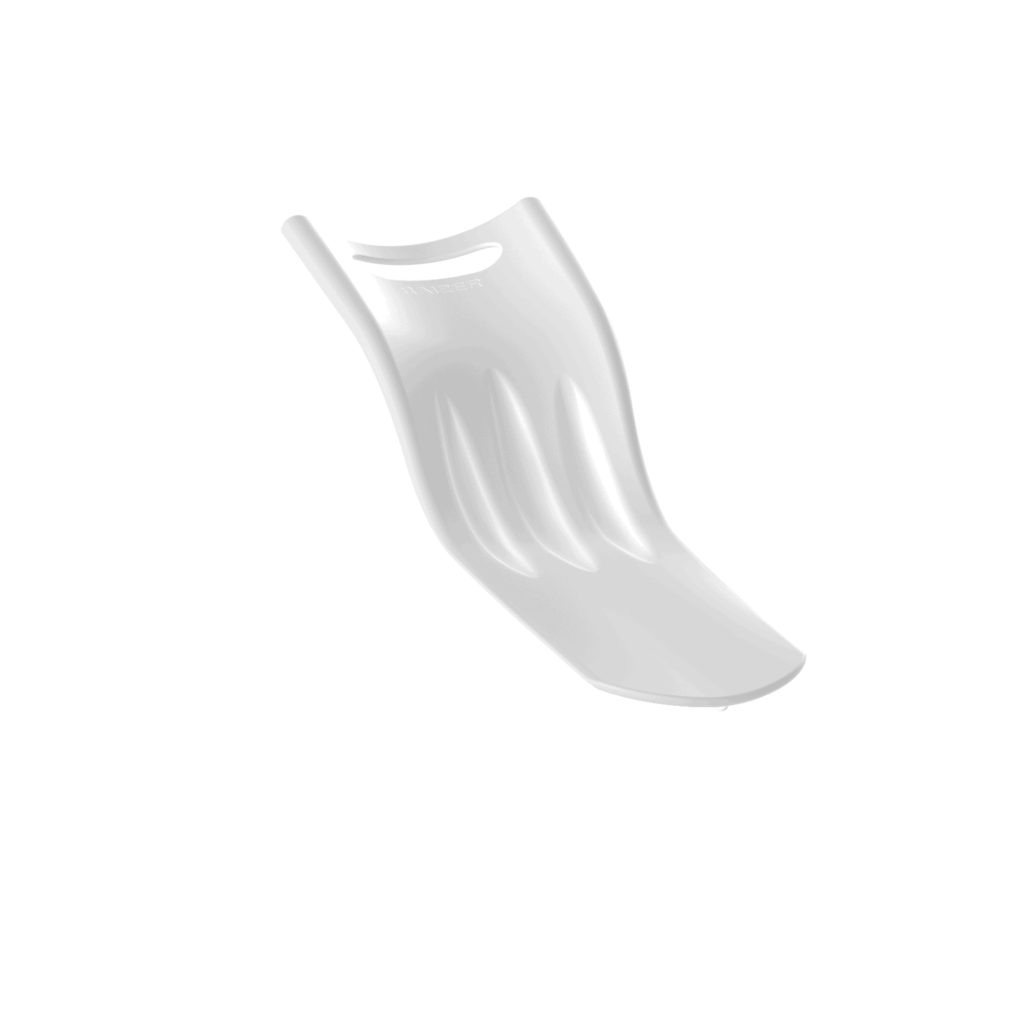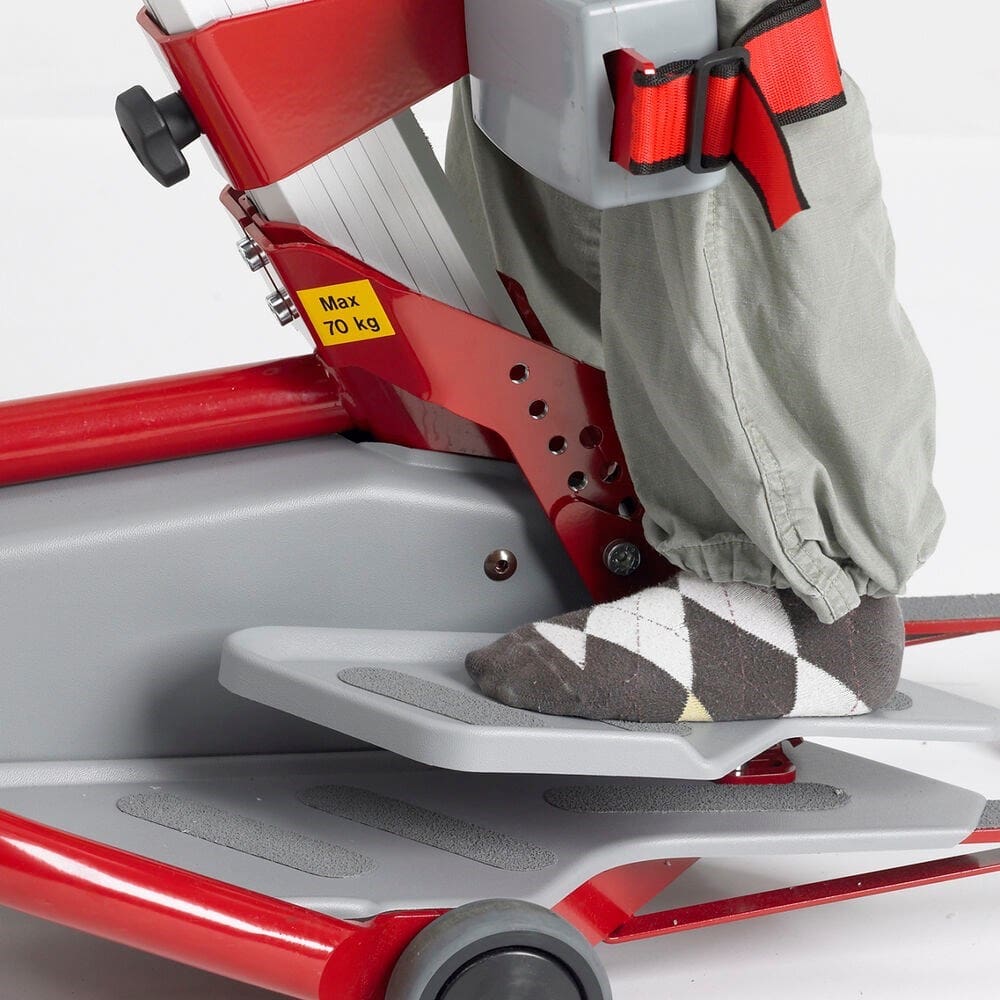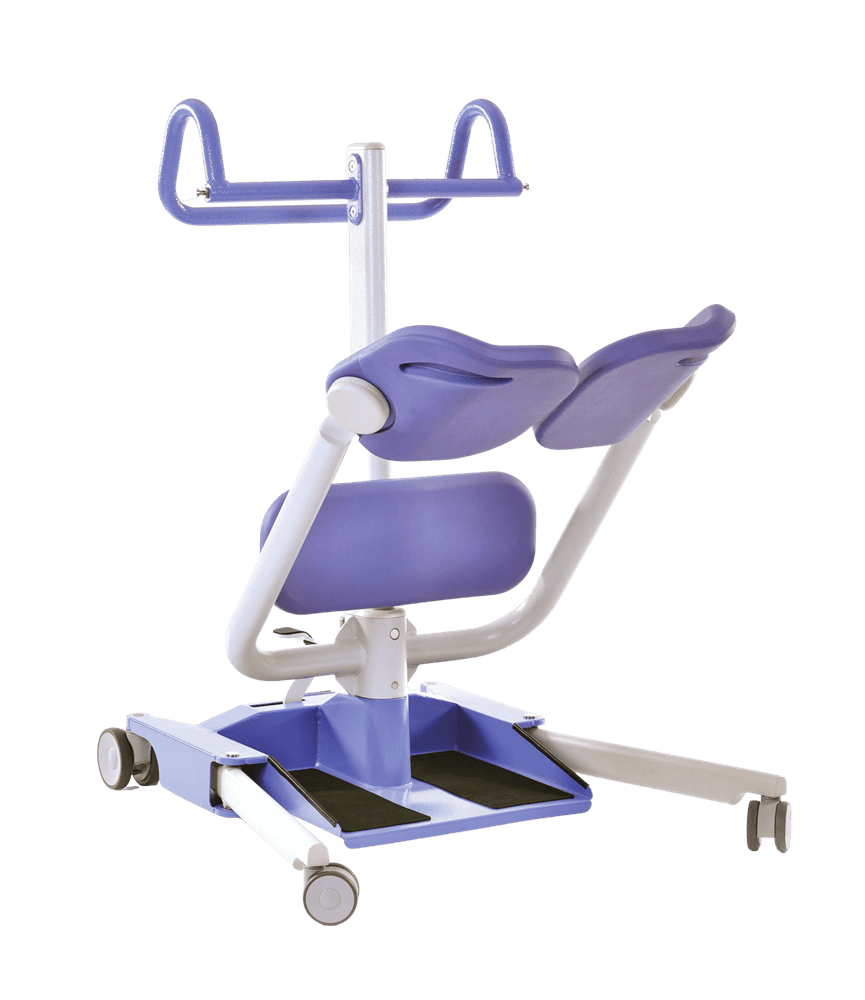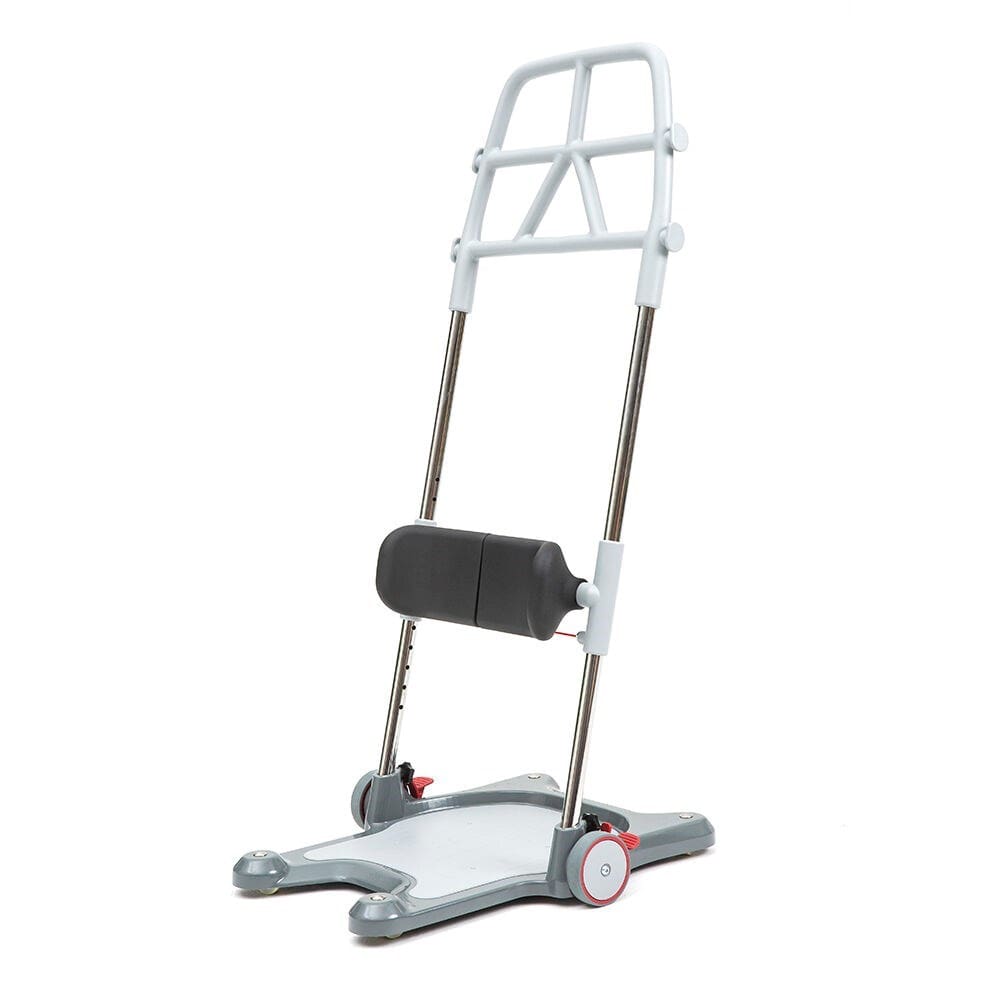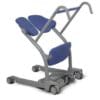
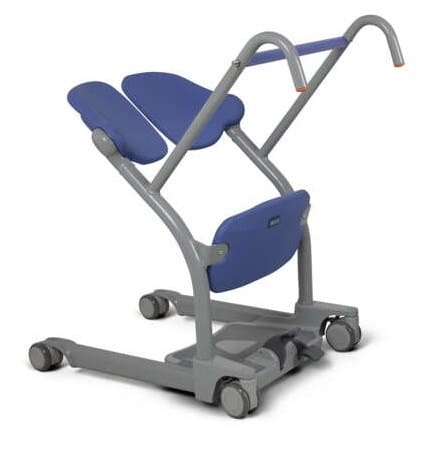
The Sara Stedy sits between a walking frame and a hoist. The client puts their feet on the footplate, knees against the pad, and pulls up on the crossbar to stand. The carer then swings the two seat flaps in behind them, and the client sits for the move to a chair, commode or bed.
Because the client is seated for the transfer rather than standing on the plate the whole way, it is steadier than a plain standing platform and easier on the carer. There is no motor and no battery, so nothing runs flat part way through and there is nothing to charge or service. A foot pedal spreads the legs to straddle a chair or commode, then closes them again for doorways, and the rear castors brake.
Who it suits
A client who can weight bear through at least one leg, has the arm strength to pull to standing and can follow instructions, but is not safe to walk even a few steps: common after a stroke, with advanced Parkinson’s, or through rehabilitation. It comes in two sizes, and the Compact suits a shorter client or a tight bathroom. A client who cannot pull up or hold on needs a powered sit to stand hoist with a sling, and a client who can take a few supported steps may only need a turning aid.
Good to know
- Manual, no battery or charging
- Not a mobile hoist: the client must be able to stand with support
- Check the 780 or 850 mm closed width against doorways and bathroom layout
- Accessories include a soft seat and a bariatric footplate