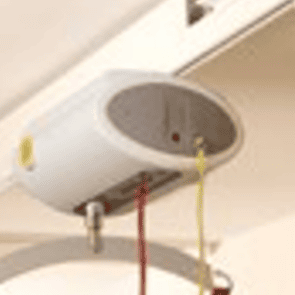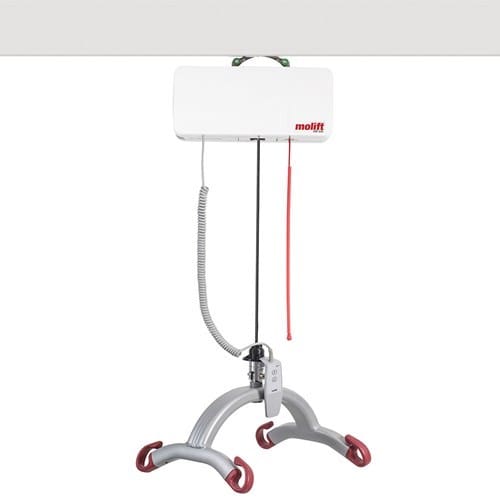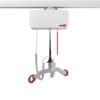
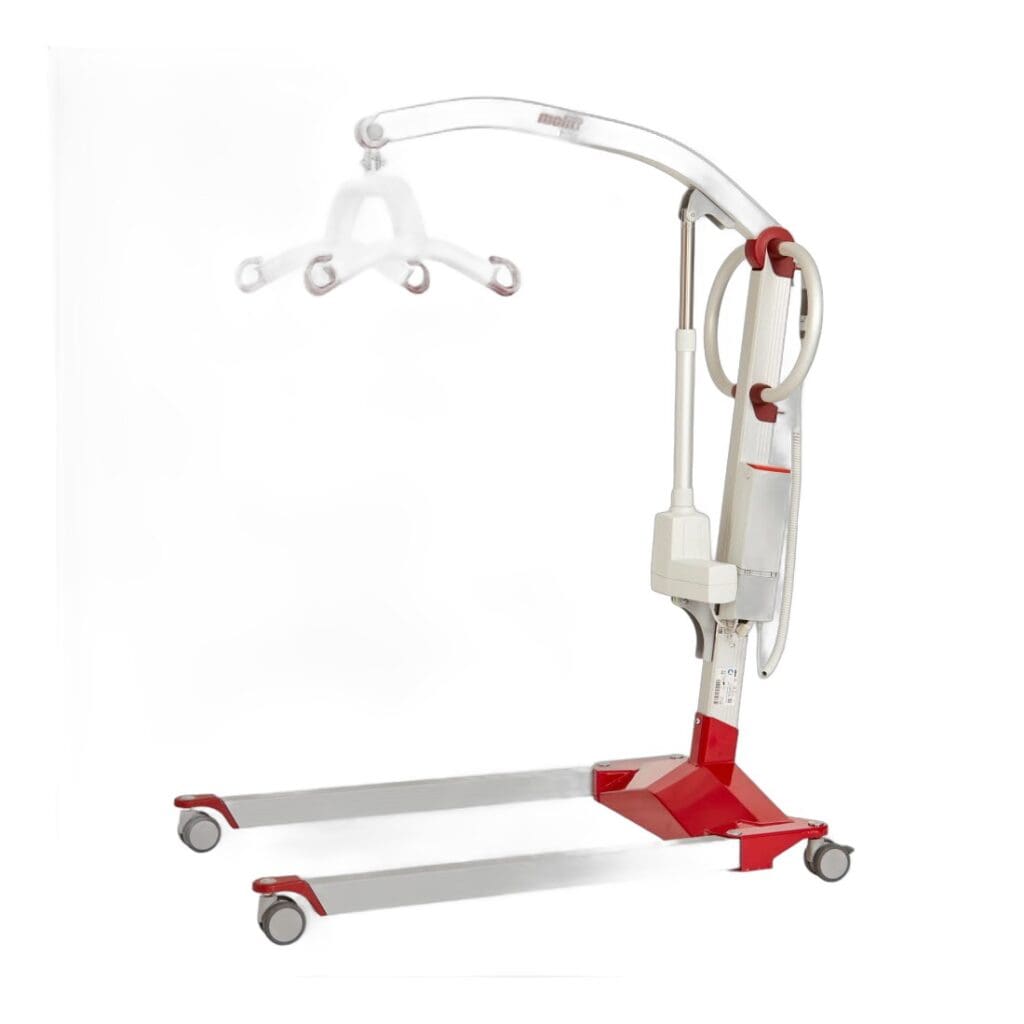
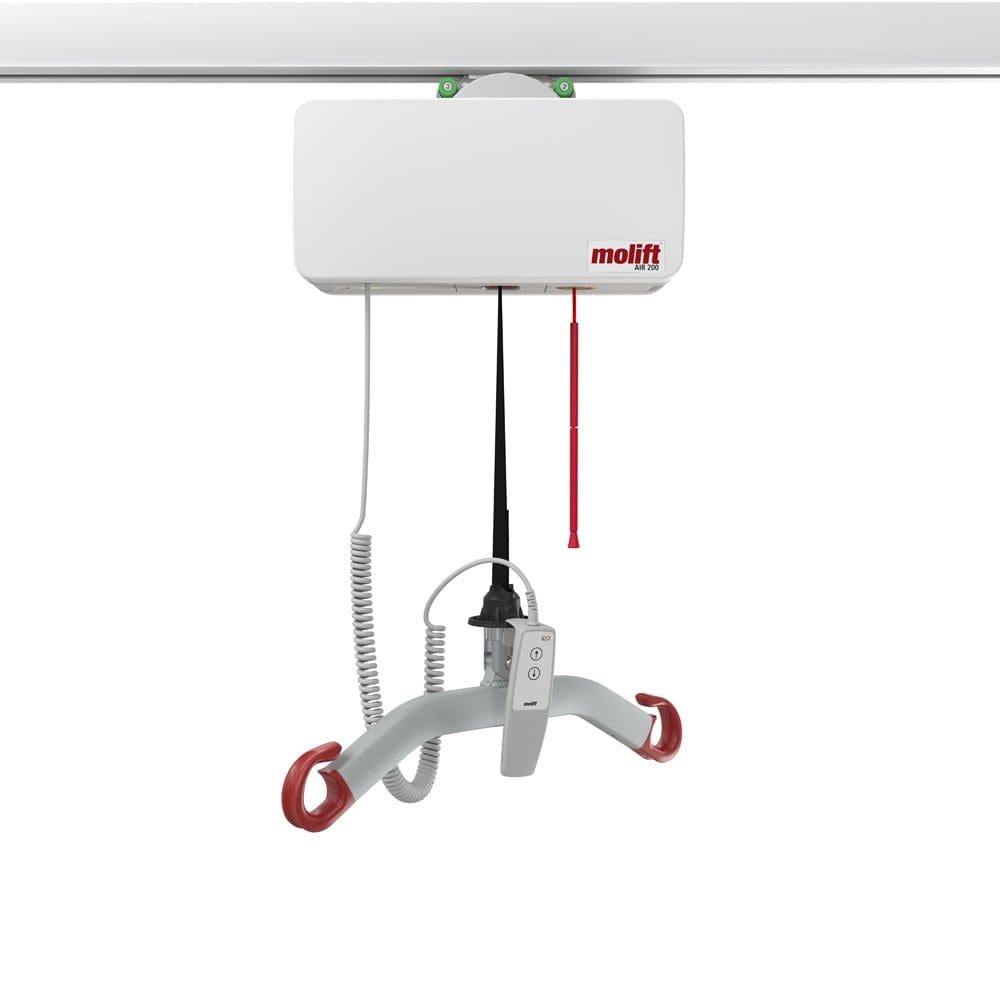
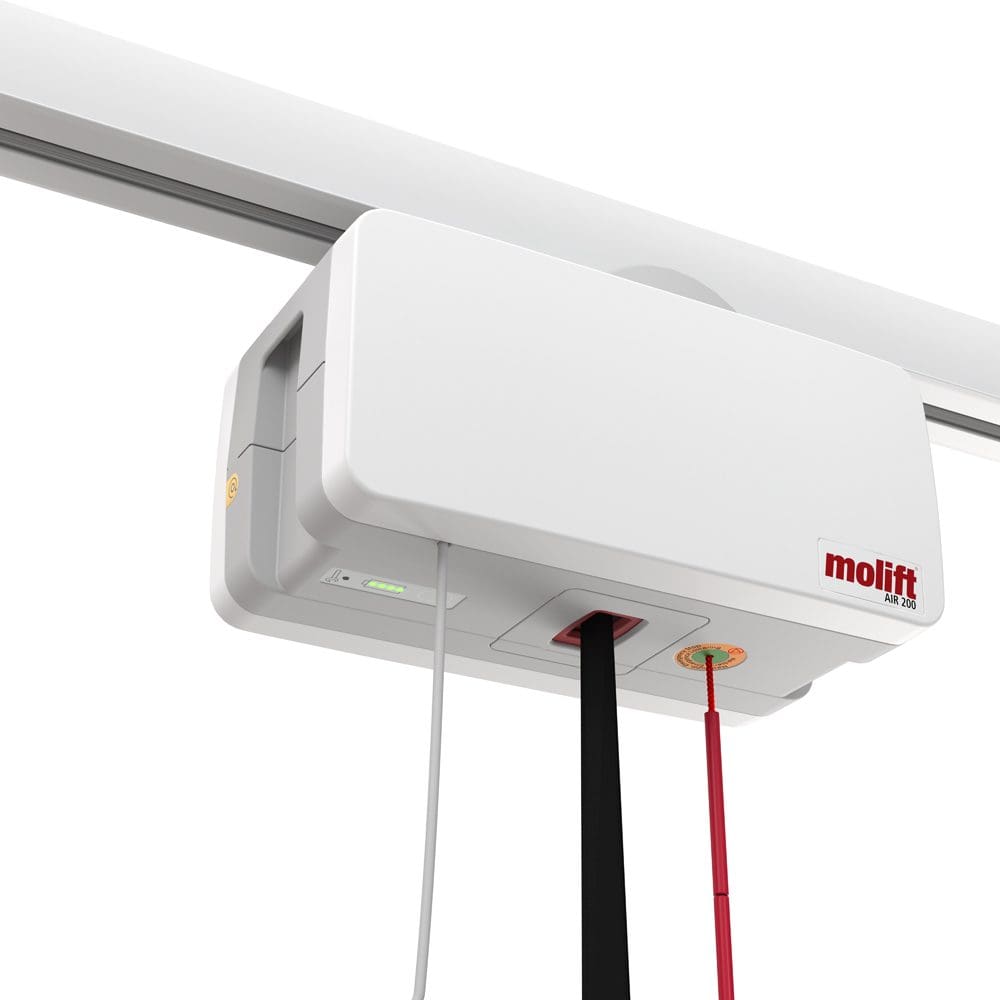
This version of the Molift Air 200 adds a propulsion motor, so the hoist drives itself along the rail from the hand control instead of being pulled by hand. On a traverse system, or where one carer is moving a heavy client across a room, that is the difference between a manageable transfer and a two-person one. It also lets some clients run the hoist themselves.
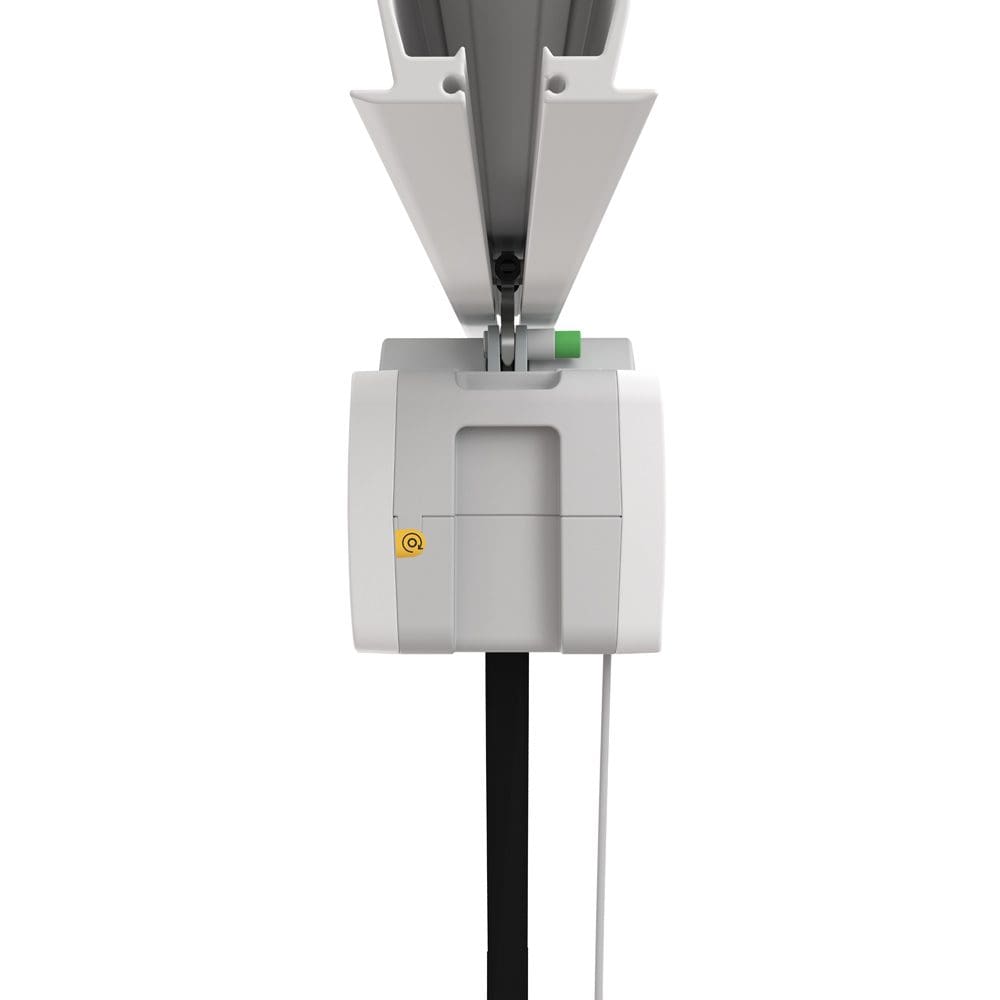
In-rail charging is the second change. The battery tops up through the track wherever the hoist is parked, so there is no docking station to remember and no flat hoist in the morning. Soft start and stop keep the lift quiet, and the unit sits close to the ceiling and releases from the trolley quickly for service.
Who it suits
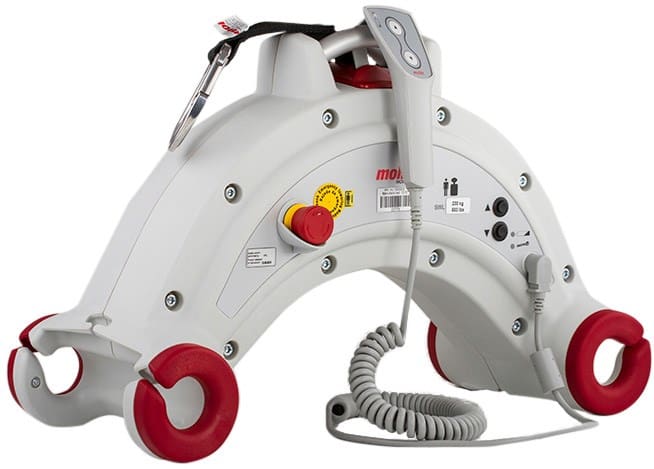
A client who needs dependent or two-person transfers several times a day: advanced MS, motor neurone disease, high-level spinal cord injury, later-stage dementia. Mechanical and electrical emergency lowering are both built in, with an emergency stop cord reachable from the floor. For a client who only needs occasional transfers in one spot, a manual-traverse Air 200 or a mobile floor hoist costs less and does the job.
Good to know
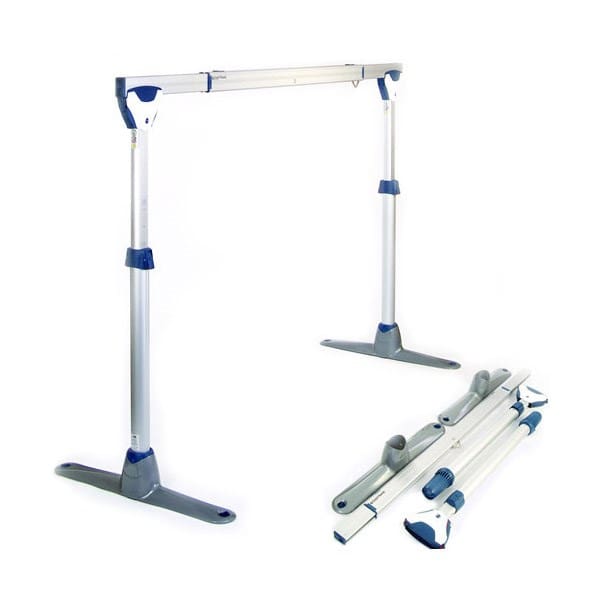
- Requires a ceiling track system, installed by a qualified installer after a site assessment; the hoist, track, sling bar and slings are quoted as a package
- Compatible with Molift 2-point and 4-point sling bars and Molift RgoSling range
- Tested to EN/ISO 10535:2021, IEC 60601-1 and IEC 60601-1-2; Class I medical device
- Manufacturer warranty is 2 years on the hoist and 1 year on batteries