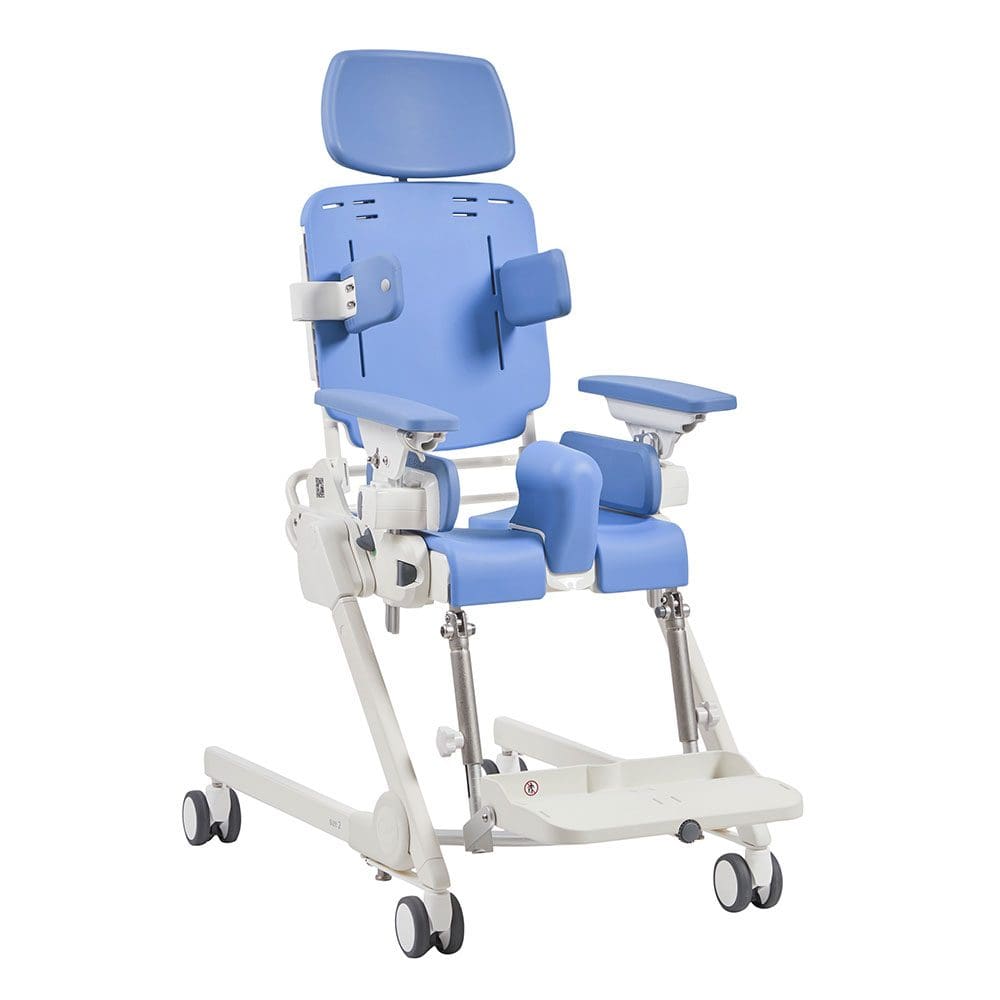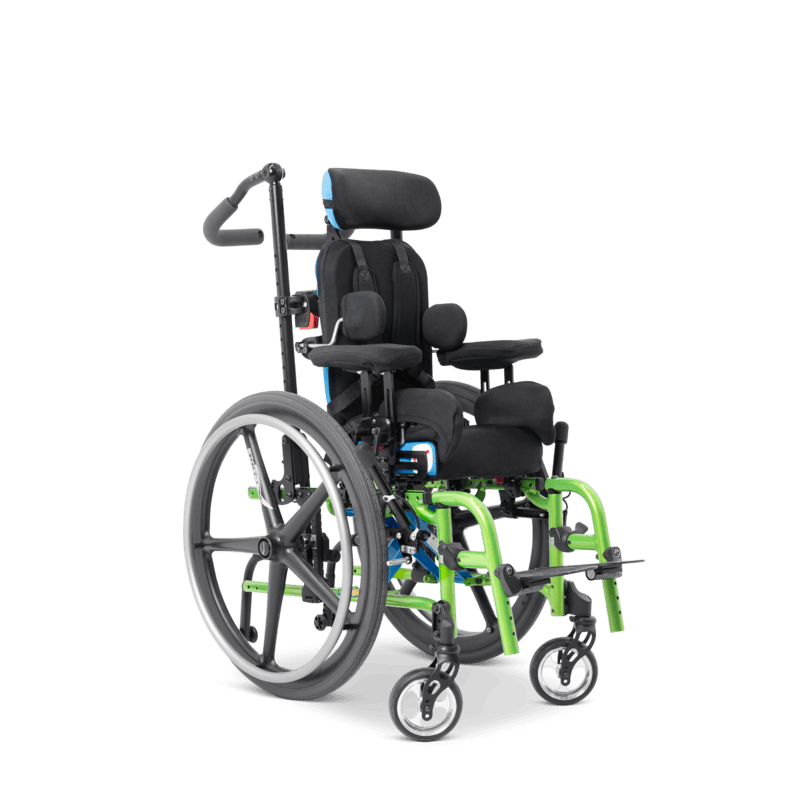
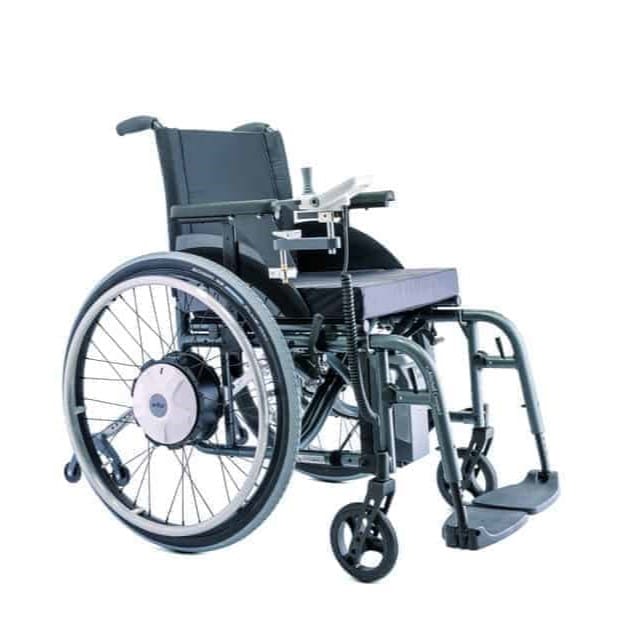
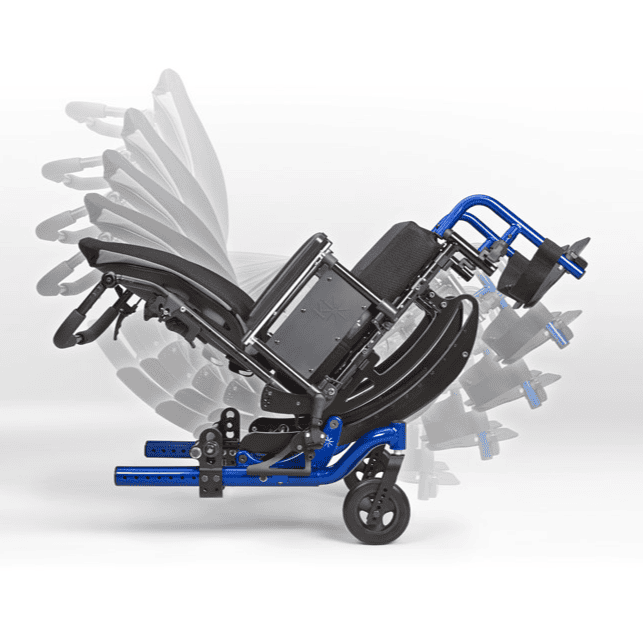
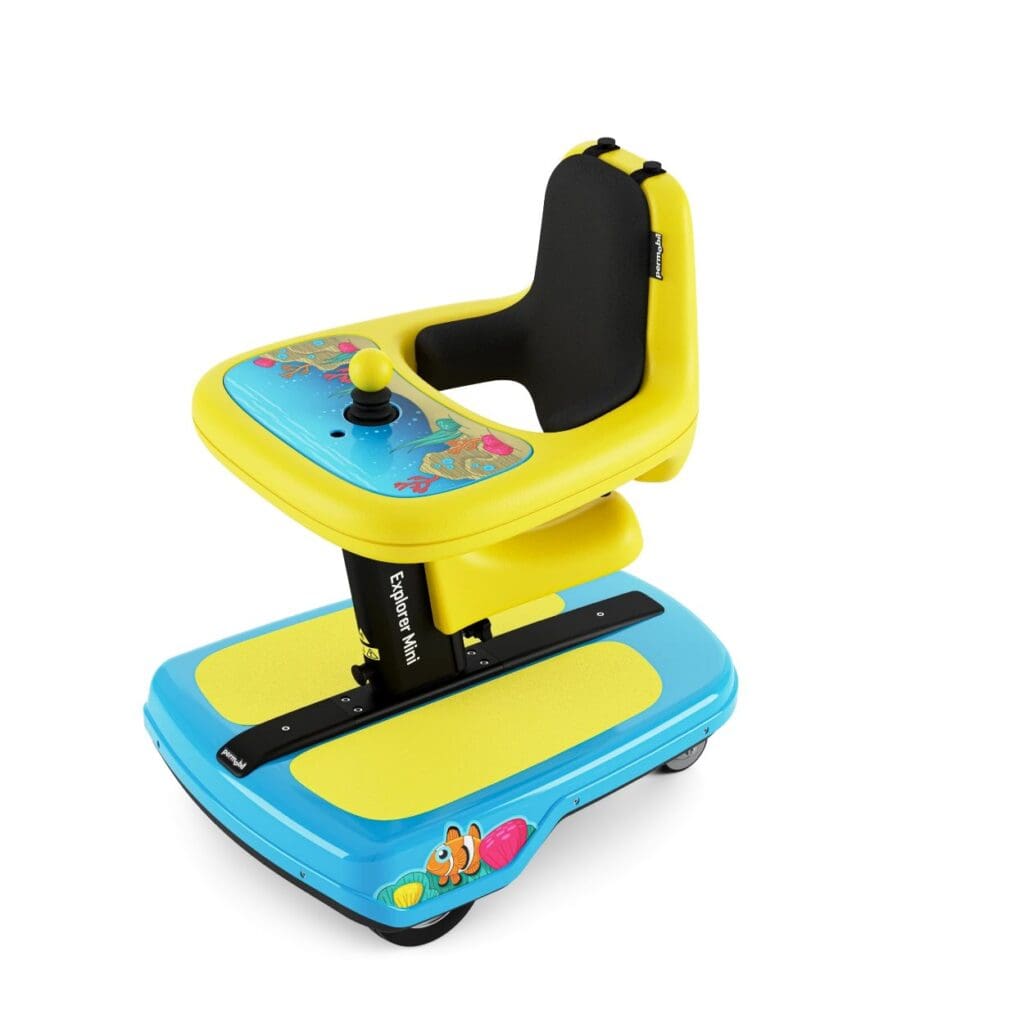
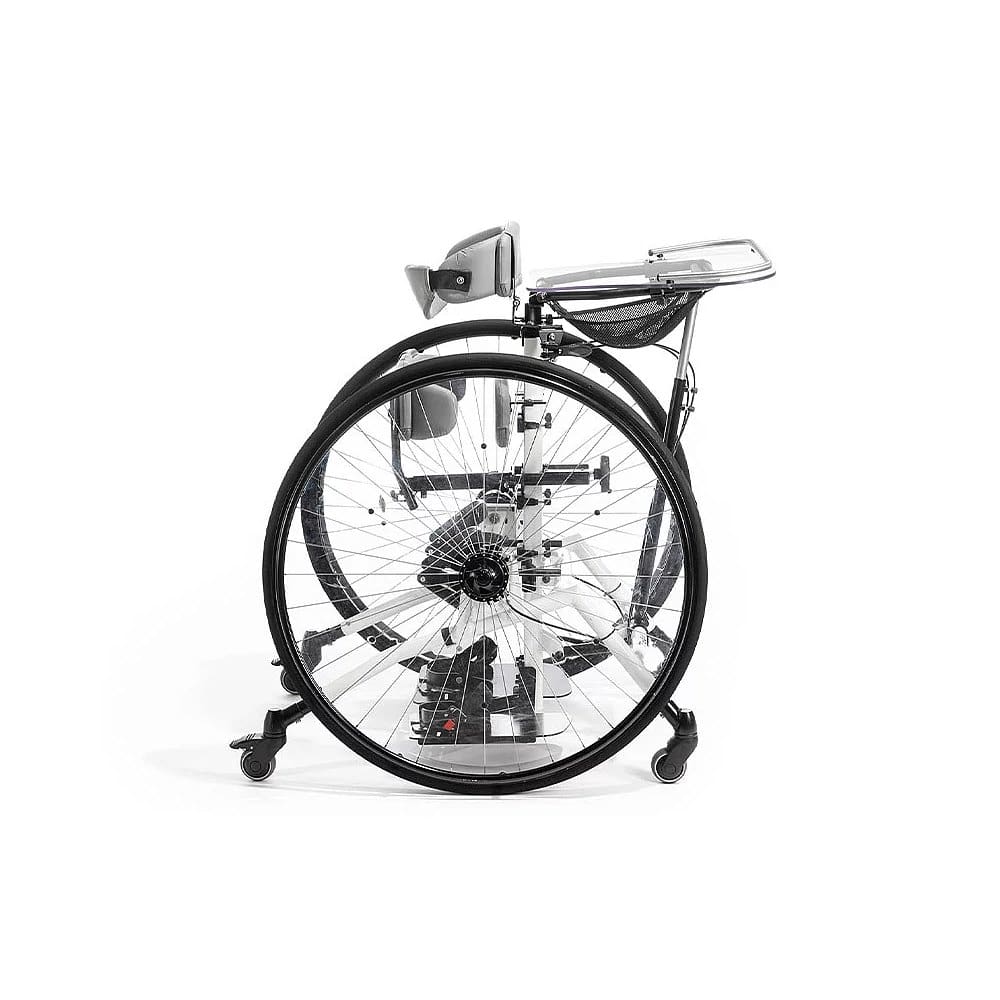
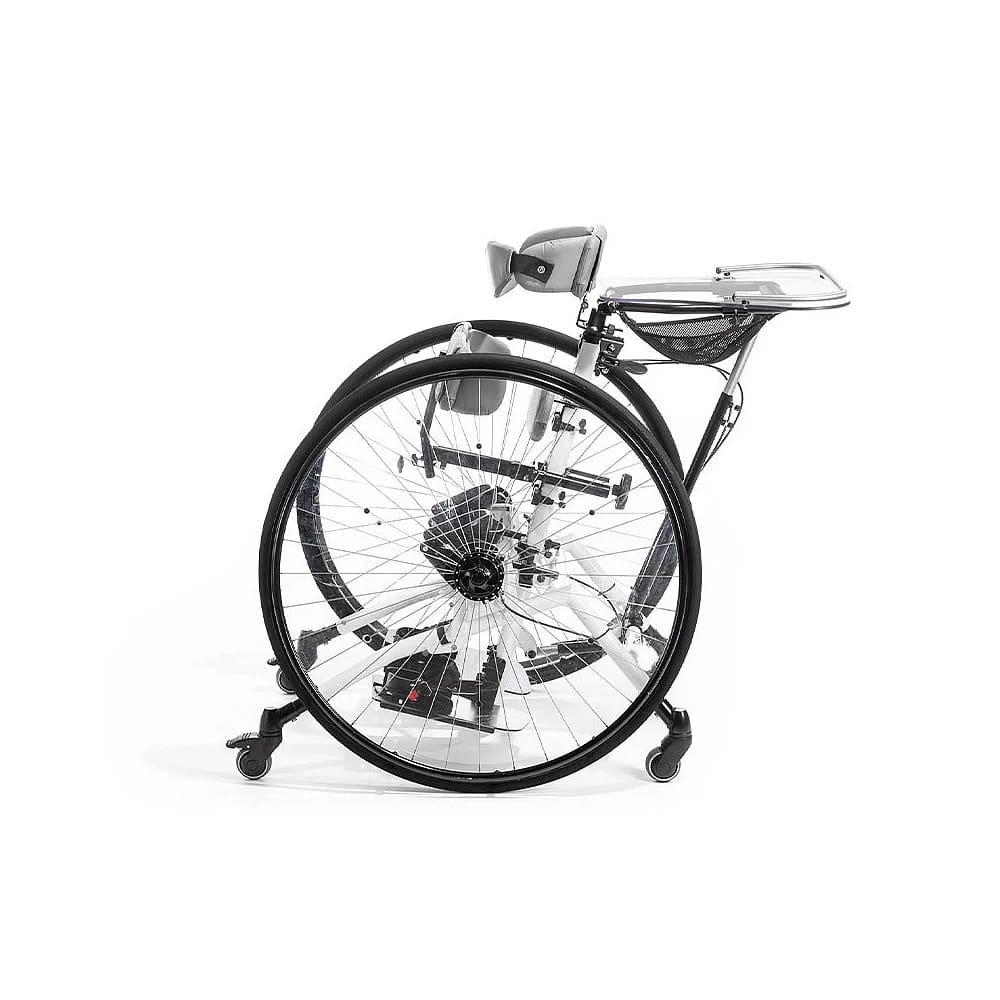
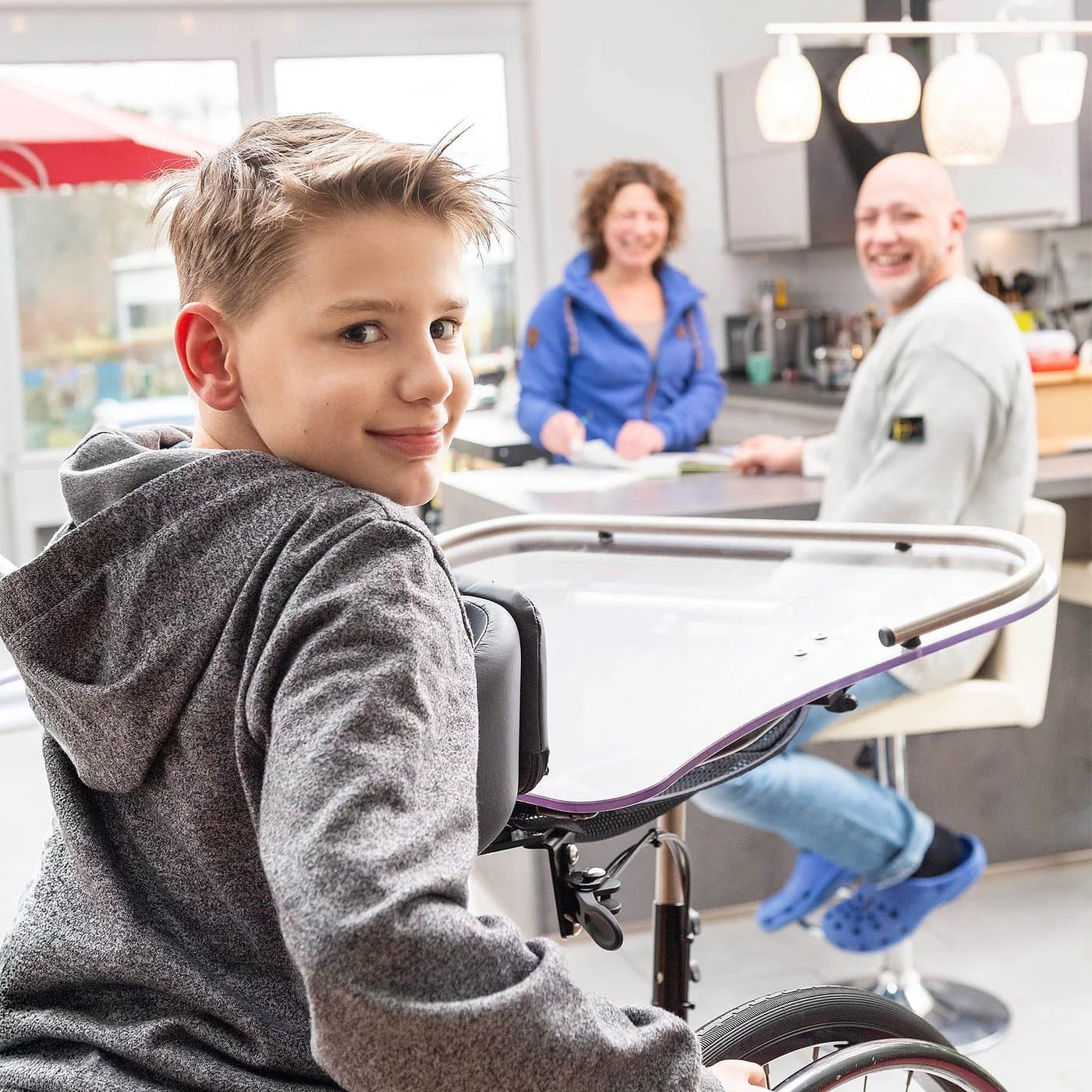
What separates todd from a static stander is that the child can go somewhere. Two large drive wheels with hand rims mean they push themselves across the classroom while standing, instead of standing in a corner waiting to be moved.
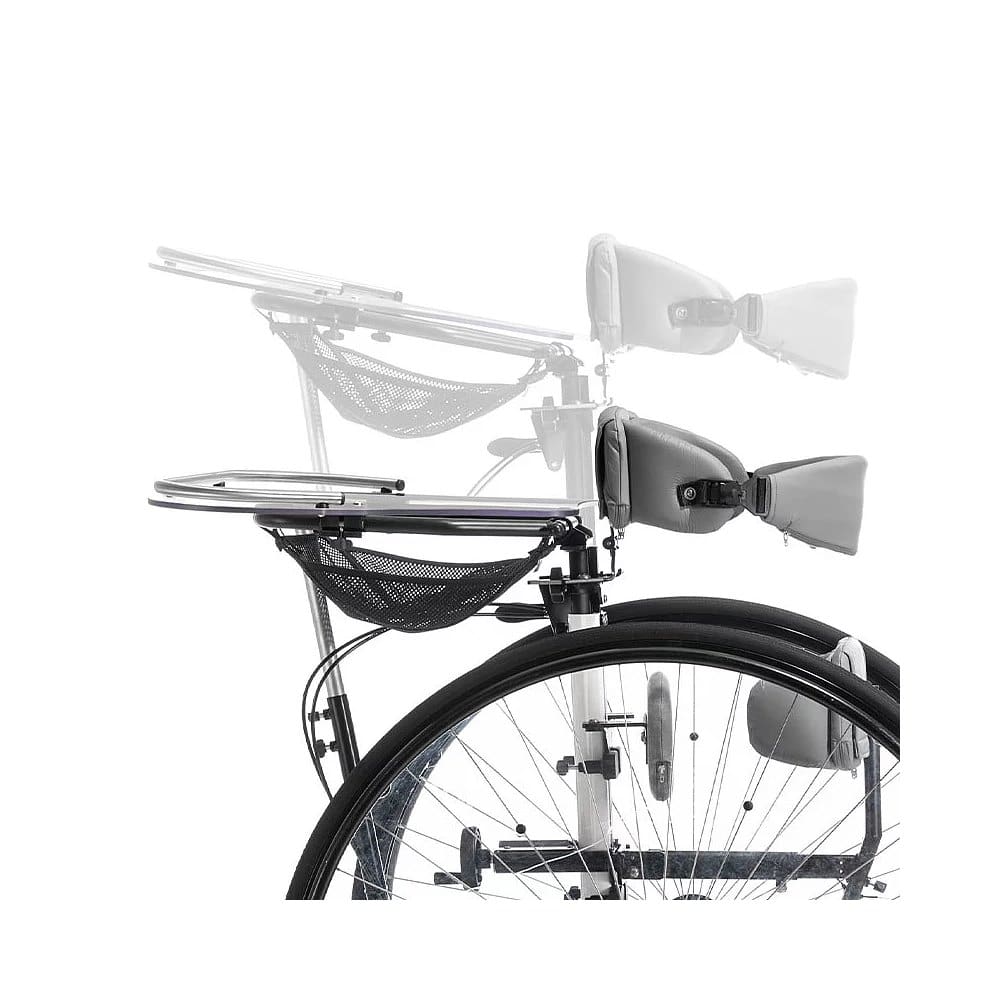
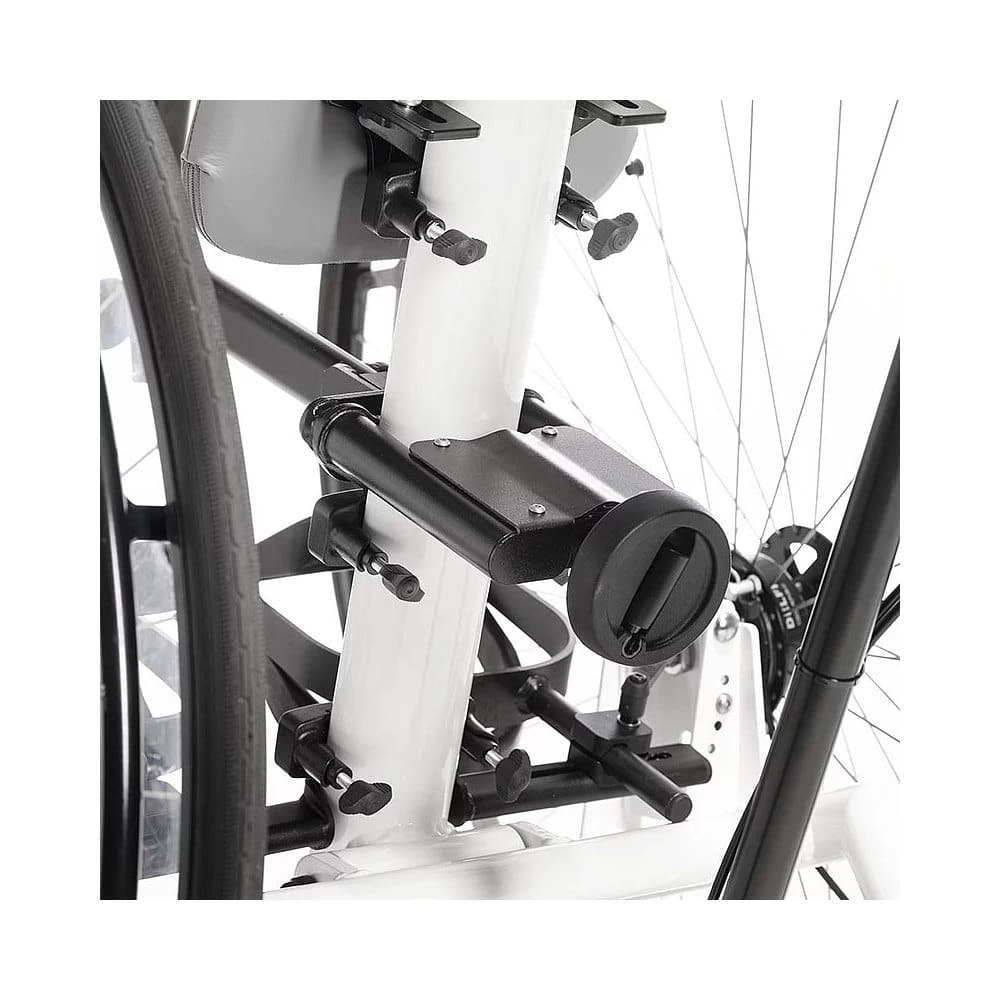
The centre column tilts, so you can move between an active upright phase and a more supported one without taking the child out, and the pelvic frame depth adjusts on a crank, which makes fine-tuning a job of seconds rather than spanners. The chest support pad adjusts for height and width with a lateral guide, the back support strap and abducted frame leave clear space for access, and the split footrests adjust for height, depth and angle with optional heel edges and ankle straps. Posterior support pads come off, a fold-down support helps at transfers, and suspended support wheels with a parking brake hold it still. An optional therapy table turns it into a work station. Schuchmann put todd at GMFCS levels III to IV.
The child needs enough upper limb function to push the rims for this to be worth choosing over a fixed stander. Test that first.